
+++ Deutsche Version weiter unten +++ German version below +++
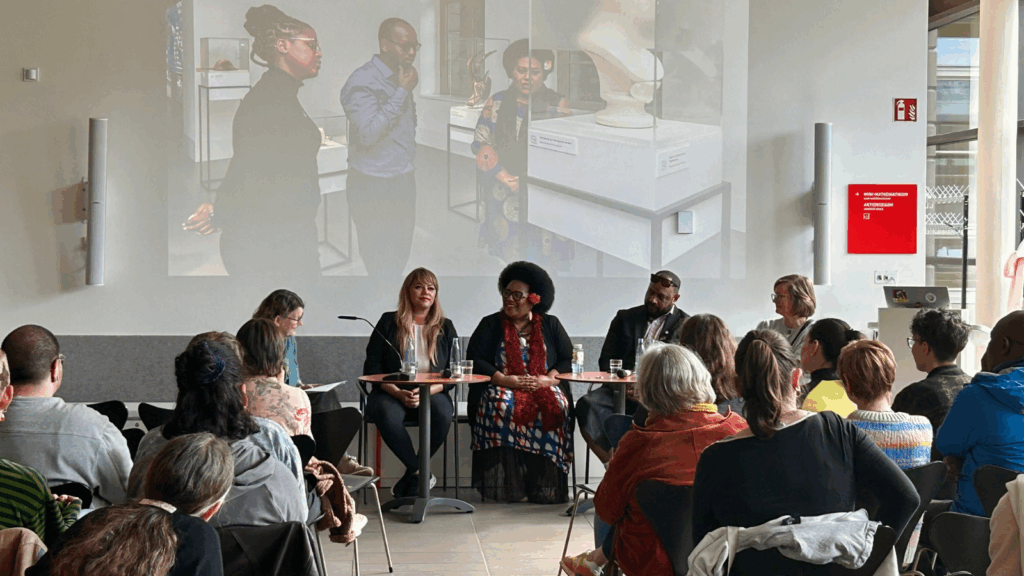
Science communication is also about responsibility, attitude and reconciliation. This became abundantly clear during the screening of two films, which have recently been incorporated into the “Spaces of knowledge” at the Forum Wissen, as well as during the discussion that followed.
The film “Oceanbone” in the Cabinets space
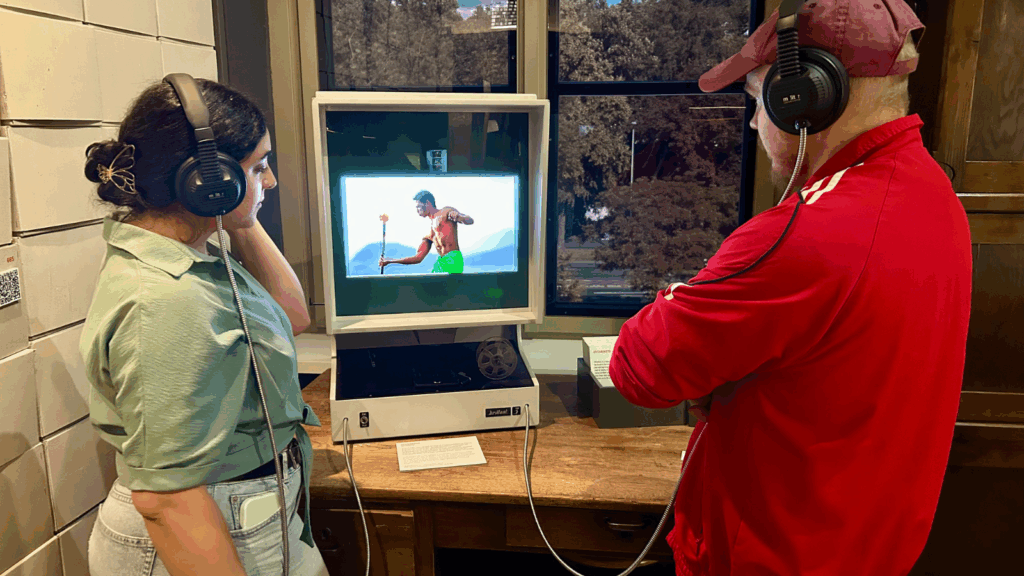
“Oceanbone” tells the story of the removal of human remains from the Pacific region by European collectors from the perspective of the ancestors themselves. What would the ancestors say if they could speak? What are the challenges facing provenance researchers from former colonies when it comes to the return of human remains by museums and university collections in Europe and North America? In the film, provenance researcher Tarisi Vunidilo from California State University, Los Angeles, provides important insights into this question.
The film adds a particularly important dimension to the theme of ‘organizing knowledge’ in the Cabinets space. It draws attention to the fact that human remains from colonial contexts were once treated as objects of research, and restores their humanity.
With “Oceanbone”, director Lani Cupchoy, also from California State University, Los Angeles, successfully strikes a balance between poetic language and the presentation of facts on the subject of human remains in collections. Just how important this combination is, became clear in the lively discussion that followed.
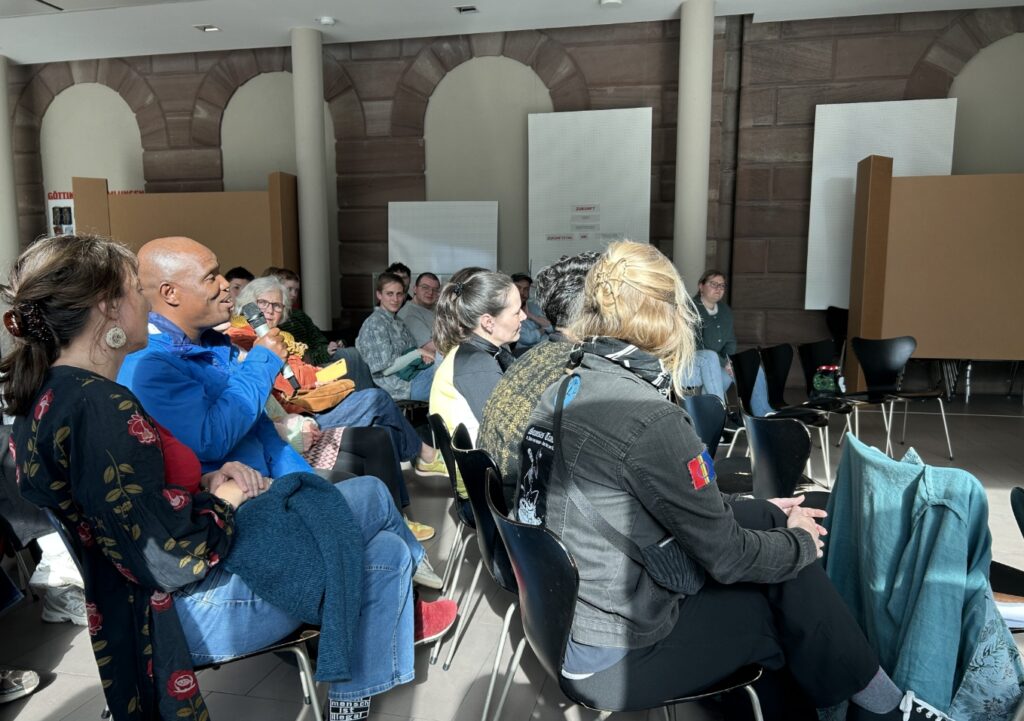
Some participants reported that the film had moved them deeply and had thus changed their understanding of the subject of human remains in collections and their return to the communities of origin.
New video installations in the Studio space
The ‘Atelier’ exhibition space has also been enhanced with a film installation. The room focuses on images in research, though it also highlights racist notions from Göttingen’s scientific history. The room is currently being redesigned to present the subject in future in such a way that injustice is not perpetuated. To this end, the film production company Akinema accompanied three people on their visit to the room and recorded their perspectives on the images and their current presentation in the exhibition space: a student assistant at Forum Wissen, a teacher from Göttingen and a first-time visitor.
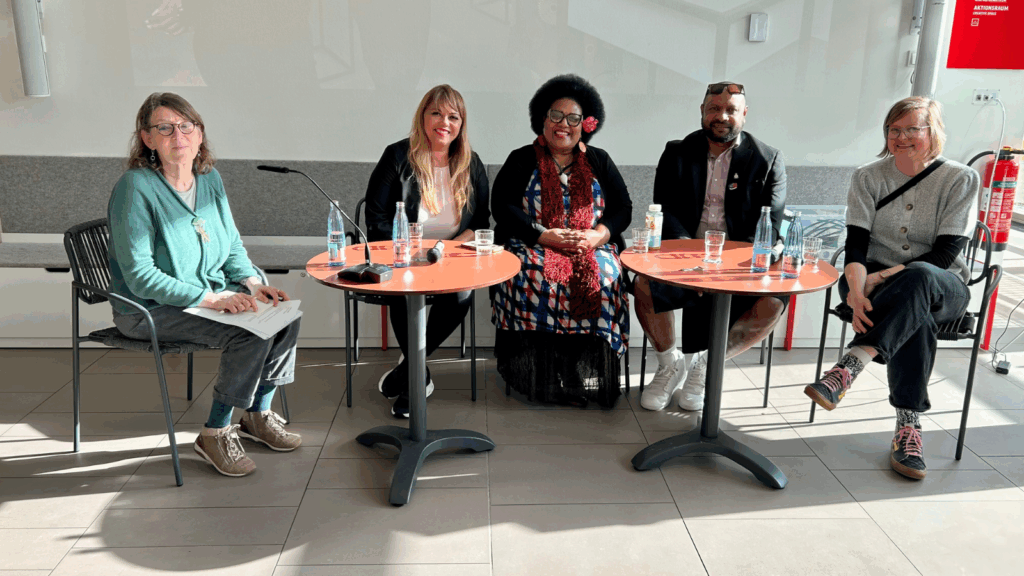
One of the protagonists, Kaliova Bilo, spoke on the podium after the screening of the films about his perception of the room as a British man originally from Fiji.
Forum Wissen as a forum for discussion
On this evening, Forum Wissen lived up to its reputation as a place for exchange, new perspectives and insights, as filmmaker Lani Cupchoy herself confirmed.
Many thanks to Lani Cupchoy, Tarisi Vunidilo, Kaliova Bilo, Regina Bendix and Janne Arp for their contributions!
On this evening, Forum Wissen lived up to its reputation as a place for exchange, new perspectives and insights, as filmmaker Lani Cupchoy herself confirmed.
Many thanks to Lani Cupchoy, Tarisi Vunidilo, Kaliova Bilo, Regina Bendix and Janne Arp for their contributions!
We are delighted that the film “Oceanbone” is now part of the “Cabinets” space of our permanent exhibition, and that the three video interviews enrich the presentation in the “Studio” space!
+++
Perspektiven zu Kolonialismus und Rassismus
Wissenschaftskommunikation hat auch zu tun mit Verantwortung, Haltung und Versöhnung. Das wurde bei der Vorführung von zwei Filmen, die neu in Ausstellungsräume der „Räume des Wissens“ im Forum Wissen eingebunden wurden sowie bei der anschließenden Diskussion mehr als deutlich.
Der Film „Oceanbone“ im Raum „Schränke“
„Oceanbone“, das Werk der Filmemacherin Lani Cupchoy, erzählt die Geschichte der Verschleppung von Human Remains aus dem Pazifischen Raum durch europäische Sammler aus Sicht der Ahnen selbst. Was würden die Ahnen sagen, wenn sie reden könnten? Wo liegen die Herausforderungen für Provenienzforscher*innen aus ehemaligen Kolonien, wenn es um die Rückgabe von Human Remains durch Museen und universitäre Sammlungen in Europa und Nordamerika geht? Zu dieser Frage liefert die Provenienzforscherin Tarisi Vunidilo von der California State University, Los Angeles, im Film wichtige Informationen.
Der Film ergänzt das Thema „Ordnen von Wissen“ im Ausstellungsraum „Schränke“ um einen besonders wichtigen Aspekt. Er lenkt die Aufmerksamkeit darauf, dass Human Remains aus kolonialen Kontexten in der Vergangenheit zu Forschungsgegenständen gemacht wurden und gibt ihnen ihre Menschlichkeit wieder zurück.
Der Regisseurin Lani Cupchoy, ebenfalls von der California State University in Los Angeles, gelingt mit „Oceanbone“ der Balanceakt zwischen poetischer Sprache und der Vermittlung von Fakten zum Thema Human Remains in Sammlungen. Wie wichtig diese Kombination ist, stellte sich in der anschließenden, lebendigen Diskussion heraus.
Einige Teilnehmer*innen meldeten zurück, dass der Film sie sehr bewegt und so ihr Verständnis für das Thema Human Remains in Sammlungen und deren Rückgabe an die Herkunftsgesellschaften verändert habe.
Neue filmische Interventionen im Raum „Atelier“
Der Ausstellungsraum „Atelier“ wurde ebenfalls um eine filmische Intervention ergänzt. In dem Raum geht es um Bilder in der Forschung, die jedoch auch rassistische Vorstellungen aus der Göttinger Wissenschaftsgeschichte zeigen. Der Raum wird aktuell überarbeitet, um das Thema zukünftig so zu vermitteln, dass das Unrecht nicht reproduziert wird. Die Filmproduktionsfirma Akinema begleitete dafür drei Personen bei ihrem Besuch des Raumes und hielt ihre Sichtweisen auf die Bilder und deren aktuelle Inszenierung im Ausstellungsraum fest: Eine studentische Mitarbeiterin am Forum Wissen, einen Göttinger Lehrer und einen Erstbesucher.
Das Forum Wissen als Diskussionsforum
Einer der Protagonisten, Kaliova Bilo, sprach nach der Vorführung der Filme auf dem Podium über seine Wahrnehmung des Raumes als Brite, der ursprünglich aus Fidschi stammt.
So ist an diesem Abend das Forum Wissen seinem Anspruch als Ort des Austauschs, neuer Perspektiven und Einsichten gerecht geworden, wie auch die Filmemacherin Lani Cupchoy bestätigte.
Vielen Dank an Lani Cupchoy, Tarisi Vunidilo, Kaliova Bilo, Regina Bendix und Janne Arp für ihre Beiträge!
Wir freuen uns, dass der Film „Oceanbone“ jetzt Teil des Raumes „Schränke“ unserer Basisausstellung ist, und die drei Videointerviews die Präsentation im Raum „Atelier“ bereichern!