Ancestral remains from the Republic of the Marshall Islands return home
Photos: Peter Heller/ University of Göttingen
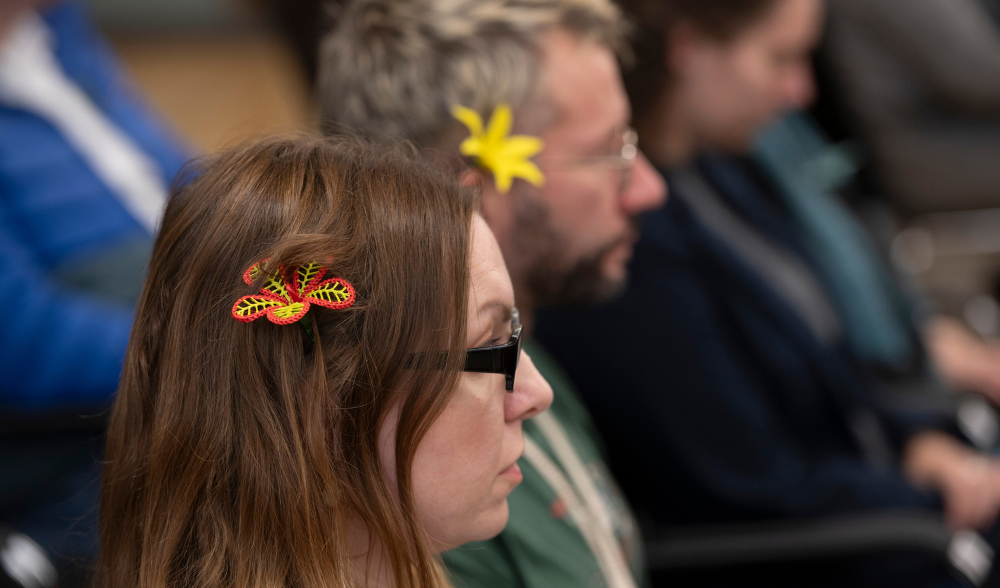
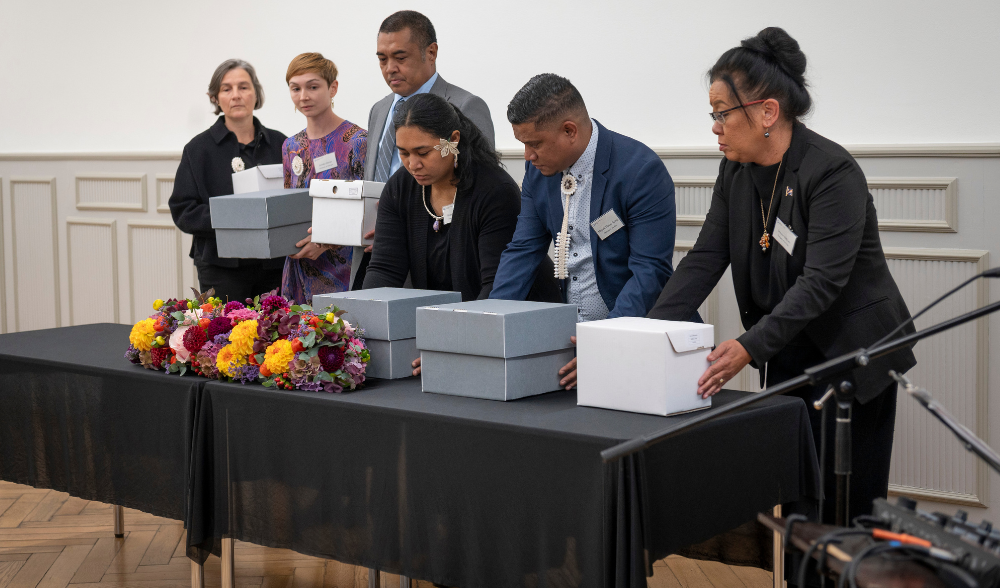
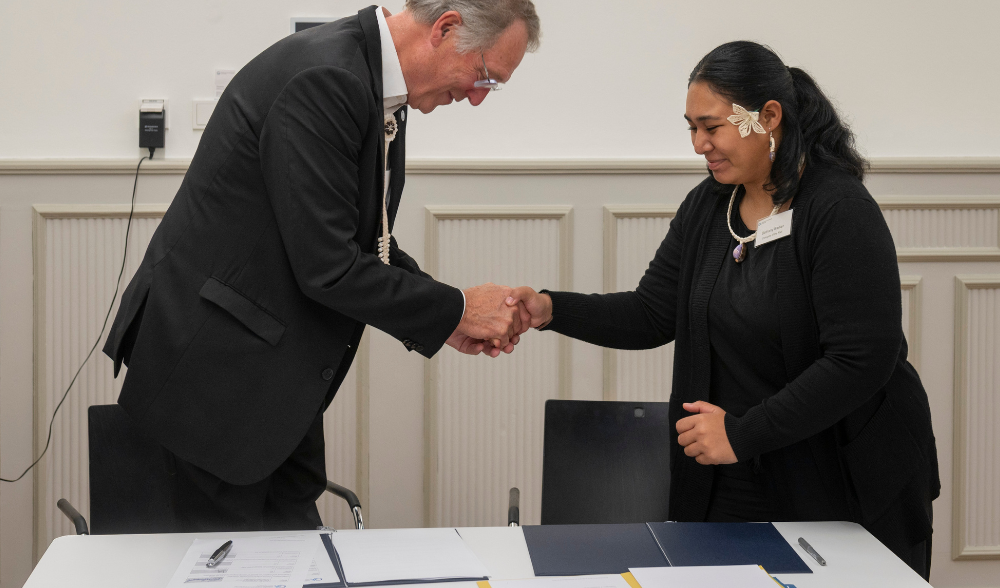
The Universities of Göttingen and Freiburg have handed over ancestral remains to a delegation from the Republic of the Marshall Islands. The formal handover took place in Göttingen on Tuesday 7 October 2025. In a moving ceremony, the delegation from the Marshall Islands gave out flowers and ties made of bast to the audience.
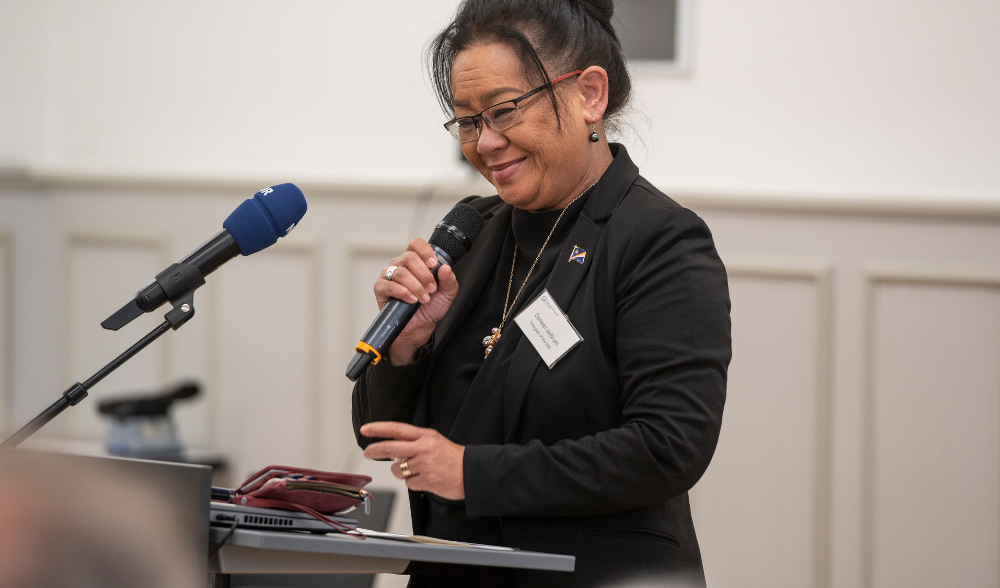
„This is the first time ever that we are repatriating our ancestors that have been lost”, said Doreen deBrum, Ambassador of the Marshall Islands to the United Nations Office at Geneva.
After outlining the history of the Marshall Islands as a former colony of Germany, a battleground in World War II and a nuclear test site, she stated: “By returning our ancestors, the Universities of Göttingen and Freiburg are setting an example we hope others will follow. It is the right thing to do. The repatriation is about connecting and restoring the dignity of our ancestors, reconnecting them to their homeland. We will lay them to rest so that they and their families will finally find peace. Thus, we are able to face the future with dignity and humanity.”
“The ancestral remains had been wrongfully taken from the Marshall Islands. It is with humility that we are returning them to you today. We hope that this can be the first step in a process of healing”, said Göttingen University President Professor Axel Schölmerich.
“Colonial injustice continues until today, a fact that fills me with deep shame”, said Christof Balzar of the University of Freiburg. He thanked the delegation of the Republic of the Marshall Islands for taking their ancestors home.
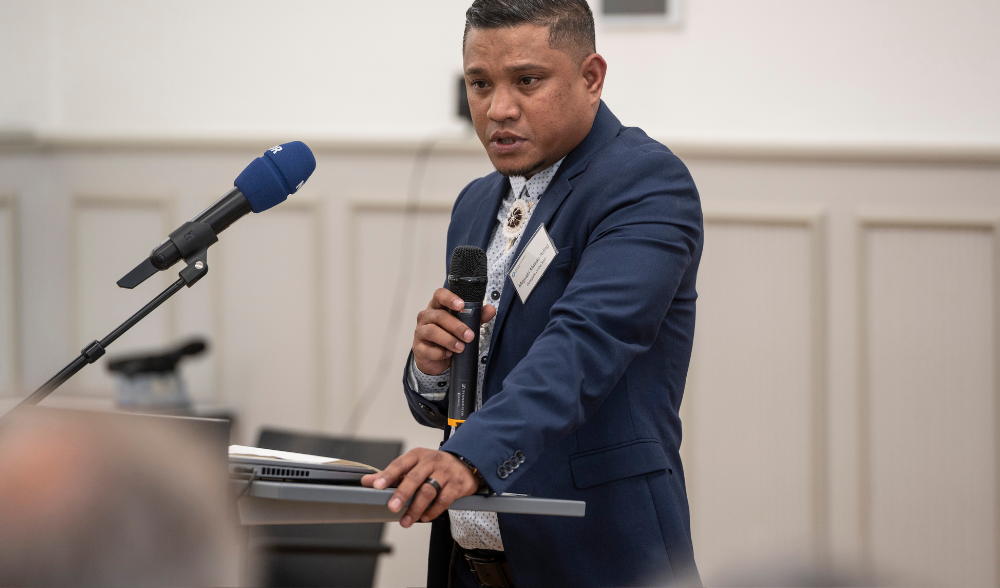
“The co-operation with the Universities of Göttingen and Freiburg in this restitution shows what can be achieved by openness, humility and friendship”, said Enewetak Representative Majuaki Masao Ading. The remains of four individuals come from the Enewetak Atoll, which consists of around 40 islands with a total land area of just under six square kilometres.
“Paul Merz, German Government Secretary of the Marshall Islands, sold the skulls to the then Museum of Ethnology in Hamburg in 1913”, explained Holger Stoecker, provenance researcher from the University of Göttingen. “How they came into his possession, cannot be reconstructed with certainty.”
From 1911, the German colonial administration attempted to exploit the economic potential of the Marshall Islands more thoroughly. With this in mind, and under the direction of Government Secretary Merz, the usable land areas of several islands and atolls, including Enewetak, were surveyed in 1912. It was probably during these visits that Merz came into possession of the human remains.
In the 1950s and 1960s, the anthropological collection of the Museum of Ethnology in Hamburg, now known as MARKK (Museum am Rothenbaum – World Cultures and Arts), was transferred to the University of Göttingen. Among the items were the remains of four individuals from Enewetak Atoll, which today belongs to the Republic of the Marshall Islands.
The human remains of four other individuals from the Marshall Islands, which were held in the anatomical anthropological collection (known as the Alexander Ecker Collection) at the University of Freiburg, originate from the Enewetak and Jaluit Atoll (also in the Republic of the Marshall Islands). They arrived in Germany via networks such as the then Museum Godeffroy, private dealers, or private collectors, who sold or donated them to the University of Freiburg.